Our Story
Our story is one of bridging research and real-world care—working alongside patients, families, clinicians, and community partners to co-create cross-sectoral interventions that are respectful, feasible, and capable of saving lives.
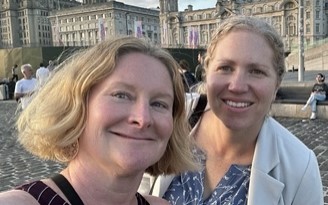
Jenn’s story: In 2011 a culmination of personal and work experiences ignited Jenn’s passion towards suicide prevention as her career focus and continue to inspire her work to this day. She had two jobs at the time: one at KP Colorado’s Institute for Health Research as a research assistant and one doing psychotherapy following completion of her master’s in clinical social work. In her research assistant role, she had a macro view of suicide care in reviewing documentation of treatment notes to validate diagnostic codes for suicide attempts. She read many devastating patient stories of suicide attempt and the typical health care response that followed. As a psychotherapist she had a micro level view working with patients who struggled with suicidal ideation, which prompted her to seek additional training and supervision to better understand how to assess and treat suicide risk. Additionally, she was touched by two suicide losses in the same month. A co-worker who no one suspected as being at risk killed himself at her place of work, and a friend’s teenage brother shot himself with a firearm. These experiences made Jenn think about the wide variety of people who are at risk of suicide when we consider designing interventions.
Julie’s story: In 2010, Julie’s mom, Sharon Graves, died by firearm suicide. Sharon was 62 years old at the time of her death and had recently moved to Washington to be closer to Julie and her new granddaughter. She appeared to be experiencing some depression in the days leading up to her death but had also recently travelled to visit her son in Denver and was actively making plans for hosting her family at her new home during the holidays. Several years earlier, Sharon had been hospitalized (“voluntarily”) for suicidal thoughts. That experience had been difficult for Sharon and her family. Despite many years of combined education and experiences working in healthcare, they had trouble navigating medication management and providing Sharon with the mental and physical care continuity she needed to recover. Following that experience she expressed many times she would never again agree to psychiatric hospitalization.
In retrospect, Julie attributed many of Sharon’s poor experiences with healthcare as contributing risk to her death, and saw similar stories play out in healthcare systems across the country through her work in mental health research. These experiences galvanized her interest and resolve to do research in partnership with people receiving and providing care (patients, families, and clinicians), including how to prioritize research questions, and what methods and frameworks best answer those questions in the ways that improve care delivery.
Our current approach to this work: We both see firearm injury prevention as a public health problem impacting millions, and having a shared belief that healthcare can play a meaningful role in preventing firearm injury and death. We each built our careers in suicide prevention and mental health services research, focused on responding to risk in ways that are evidence-based, patient-centered, and practical.
As our work has evolved, so has our conviction that preventing firearm injury requires more than good intentions or one-time trainings but needs a broader systems level approach. Over time, our projects have included developing and testing ways to talk with patients about firearm access, supporting safer storage, and helping clinicians use safety planning and other tools in everyday care settings—not just in moments of crisis. It requires trusted relationships, careful implementation, and approaches shaped by the people most affected. We have built a team of people from all walks of life with a similar passion and vision for this work.
Our story is one of bridging research and real-world care—working alongside patients, families, clinicians, and community partners to co-create cross-sectoral interventions that are respectful, feasible, and capable of saving lives.